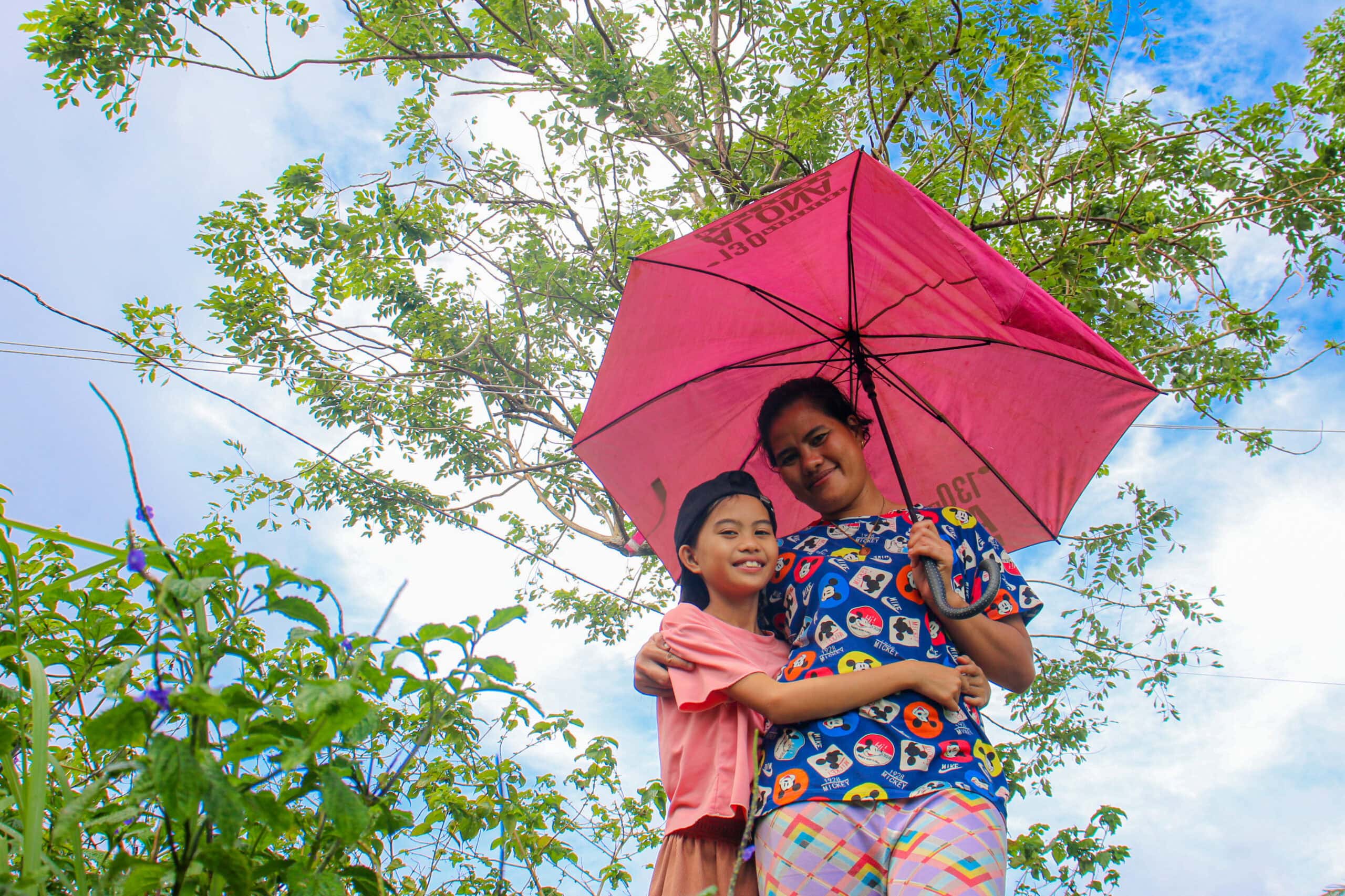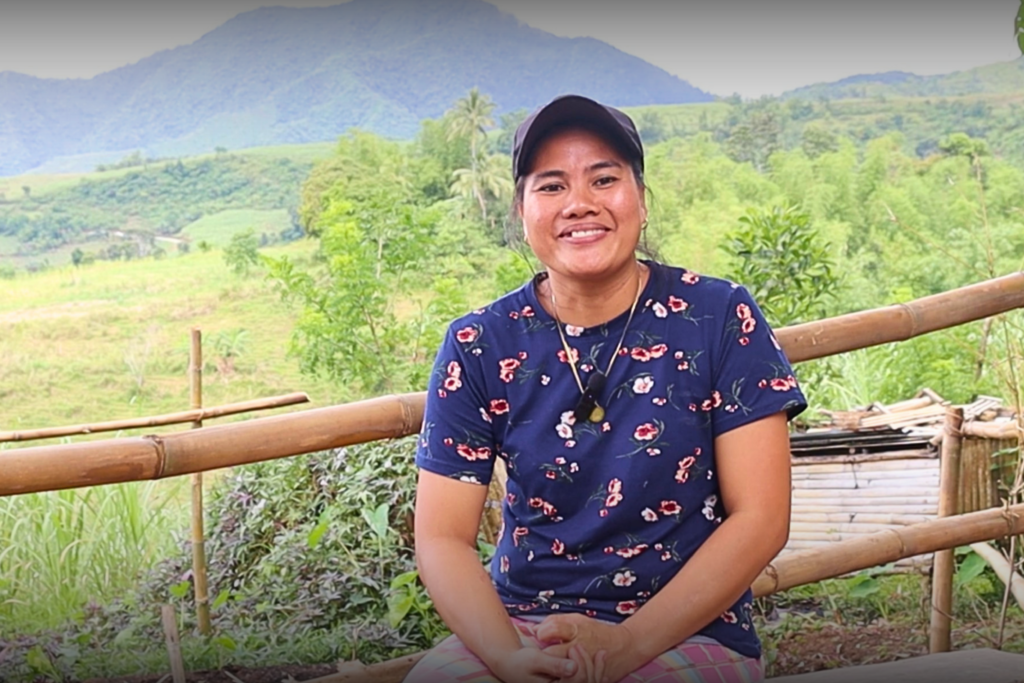
How solar energy is improving the life of a mother and her family in an off-grid farming community.
Written by: Pedimente, L.A.
The first light to enter Tita Jubith’s home each day did not come from a light bulb. It came from the sun.
In Purok Tumpok, Don Salvador Benedicto, daylight has long shaped the rhythm of everyday life.
For families living in this geographically isolated community, the sun determined when work could be done, when children could study, and when the household had to begin winding down. With limited access to reliable household electricity, every hour of daylight mattered.
For Tita Jubith Gregorio, a mother and Purok President, this meant making the most of the afternoon while there was still enough light. Her children had to finish their schoolwork before darkness settled over their home. Household chores were done early. By evening, the family had little choice but to slow down.
For years, the setting sun marked the end of what the family could comfortably do for the day.
A Home Dimmed by Darkness
By late afternoon, Tita Jubith was already preparing her household for the night.
“…timprano pa kami gadigamo,” she recalled. “Halin sa ubra, mga 4:30 gahimos na kami kay para lang masanag ang palibot.”
“We used to finish everything early. After work, by around 4:30, we were already tidying up so there would still be enough light around us.”
The family relied on a kerosene lamp, locally called a kingki, when they needed light after sunset. But even that small source of light was not always dependable.
“Kingki lang amon ginagamit ma’am…kung mag-ano ang hangin da, gakapatay man ang kingki,” she said. “Amo na ang gin-eksperyensiyahan namon nga kabudlay nga wala gid sang suga [ang] isa ka panimalay.”
“We only used a kerosene lamp. When the wind was strong, the lamp would go out. That was the difficulty we experienced when our home had no electricity.”
For Tita Jubith, one of the hardest parts was seeing her children struggle with their schoolwork.
“Ang nabudlayan ko gid ma’am kung magtuon sila nga wala sang suga. Kadulom. Daw indi sila ka-ano gid sang ila pagtuon, labi na kung may assignment. Maghalin sa eskwelahan, timprano pa sila ga-answer. Kung gingab-i na gid ma’am, pwerte na gid kadulom sa amon nga panimalay kay wala sang suga.”
“What was really difficult for me was when they had to study without light. It was so dark. They could hardly continue with their schoolwork, especially when they had assignments. As soon as they came home from school, they would work on their assignments while it was still early. Once it became evening, our home was very dark because we had no light.”
Her children would try to answer their assignments while there was still daylight. Once evening came, studying became difficult.
It was a simple limitation with consequences that reached far into family life. A school assignment could remain unfinished. A chore had to be completed earlier. Time together after dinner was shortened because there was little reason to stay awake in a dark home.
The sun would rise again the next morning, but the same cycle would begin.
When Evening Became Possible
That cycle began to change when 37 households in Purok Tumpok received solar home systems through Project REConnect.
Implemented by the Negrosanon Young Leaders Institute (NYLI) with funding support from the Honnold Foundation, Project REConnect brings clean and reliable solar energy to households in geographically isolated communities. Each household in Purok Tumpok received a solar home system that provides lighting, device charging, and other basic household energy needs.
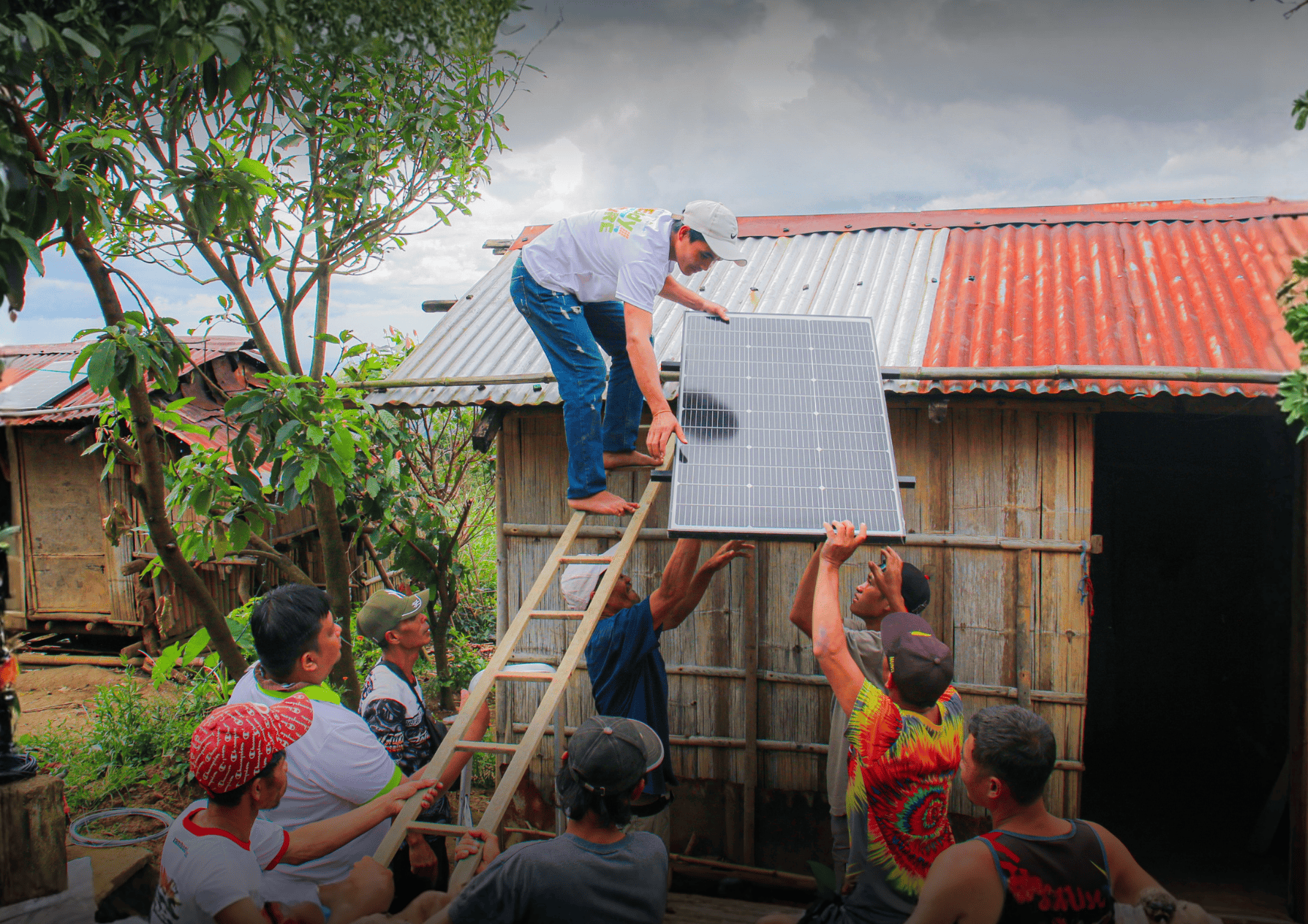
For Tita Jubith, the difference was immediate.
“Madamo gid ya bag-o ma’am tungod sa kasanag nga ginhatag sang solar sa amon,” Tita Jubith said. “Mapulaw mo para sa mga bata. [Sa] sanag na sila gatuon.”
“A lot has changed because of the light the solar system has given us. The children can stay up later and study while there is still light.”
For Tita Jubith, solar energy means brighter evenings, more time for her children to study, and more moments for the family to be together. Project REConnect is implemented by the Negrosanon Young Leaders Institute (NYLI) with funding support from the Honnold Foundation.
The change was not limited to schoolwork.
With light inside the home, the family could stay together a little longer after sunset. They could talk, spend time together, watch television, and charge their phones.
“Ti maka-bonding bonding pa kamo, isturya isturya kay sanag pa…”
“We can spend more time together and talk because there is still light.”
The family could also charge their phones, something that had previously been difficult without a reliable source of electricity.
“Oo…kis-a ga-ano cellphone, ma-charge naman amon cellphone.”
“Yes. Sometimes we use our phones, and now we can charge them.”
She also talked about the small but important changes that came with having light in places that had once been difficult to navigate after dark.
“Amo lang na ang na-ano ko ma’am ang kasanag nga mahatag sang solar sa isa ka panimalay, pwerte gid kadako ma’am kay pagkadto ka CR, dulom ang CR mo, ti subong may suga na..may solar na. Ti mag-isa mo lang ya ka ano sang switch, sanag na ya imo nga panimalay. Amo na gina-ano ko, pa-thankful ko gid ya ma’amsa NYLI.”
“For me, the light that solar energy brings to a household makes such a big difference. Before, even the bathroom was dark, but now there is light because we have solar. You just switch it on, and your whole home is lit. That is what I am most grateful for, especially to NYLI.”
For Tita Jubith, these may sound like ordinary things: turning on a light, walking to the bathroom, charging a phone, or letting a child finish an assignment.
But in a home where darkness once determined what could happen after sunset, these small changes have made a meaningful difference.
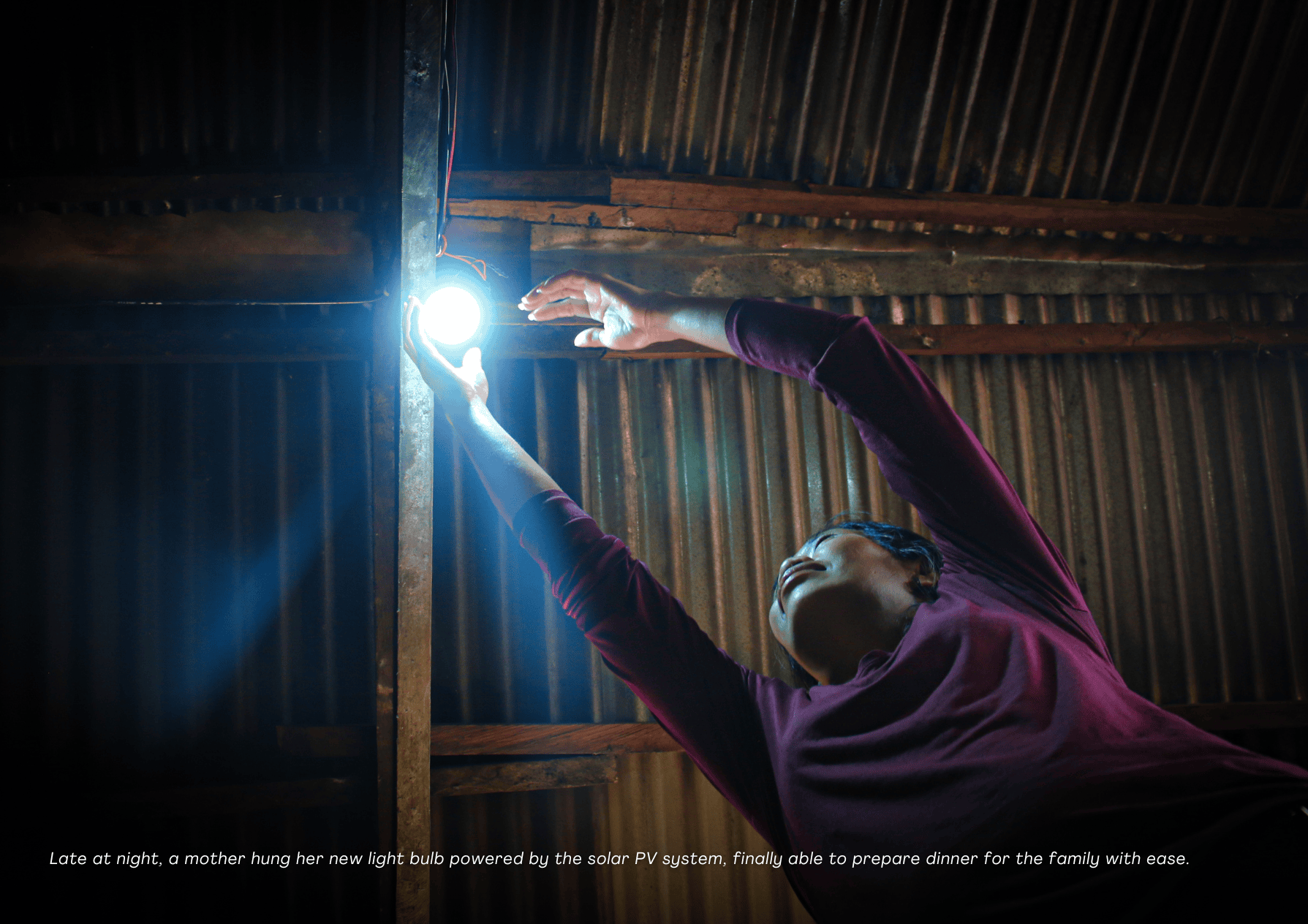
A Light Worth Sharing
The additional hours of light have also given Tita Jubith more room to think about what she wants for her children.
Her hope is simple: that they will study well and finish school.
“…tuon na lang gid mayo kag makatapos gid ya sa pag-eskwela.”
“I just hope they study well and finish their education.”
She also hopes that, as they grow older, they will find ways to give back to others.
“…gusto mag-volunteer parehas sang inyo…”
“I hope they can volunteer someday, just like you.”
The experience also gave her new lessons about caring for the environment.
“Damo gid ko natun-an ma’am. Manlimpyo ka. Matanom ka gid sang kahoy para sa environment kay amo gid na ang maka-save sa imo.”
“I learned so much. We should keep our surroundings clean. We should plant trees to care for the environment because that can help protect us.”
For her, caring for the environment is something that begins with everyday actions.
“…na indi gid halay nga guba ang aton na Mother Earth kay kinanlan ta gid na halungan.”
“We should not let our Mother Earth be destroyed because we really need to take care of her.”
Her hopes extend beyond her own household, too.
She knows that other families in nearby areas face similar challenges and that some of them also want access to solar energy.
“May handom man ko para sa ila… gusto man nila mag-solar… handom ko nga matagaan man sila sang solar…”
“I also have a hope for them. They also want to have solar, and I hope they can be given solar systems too.”
Having experienced the difference herself, she wants other families to have the same opportunity.

When Light Becomes Part of Home
The sun still rises and sets over the mountains of Purok Tumpok. The community remains geographically isolated, and many of the challenges that come with living in an upland area remain.
What has changed is what happens when daylight ends.
For Tita Jubith and the other households who received solar home systems, sunset no longer means that the household has to stop. A child can continue studying. A family can stay together a little longer. A phone can be charged. Someone can safely walk to the bathroom. The home can remain lit even after the last daylight disappears behind the mountains.
These are small moments, but together they have changed the rhythm of everyday life.
Project REConnect was designed to address energy insecurity while supporting education, livelihoods, resilience, and community participation in geographically isolated communities. In Purok Tumpok, its impact can be seen in the ordinary moments that happen after sunset.
For Tita Jubith, the solar light is a reminder of how much can change when a basic need is met.
The sun that once marked the limit of her family’s day now helps power their evenings.
And when morning comes, her children can begin another day with the same light that has always been there, but with a little more time, a little more possibility, and new hopes for what they can do with it.
The first light to enter Tita Jubith’s home each day still comes from the sun. Now, some of that light stays with her family after sunset.