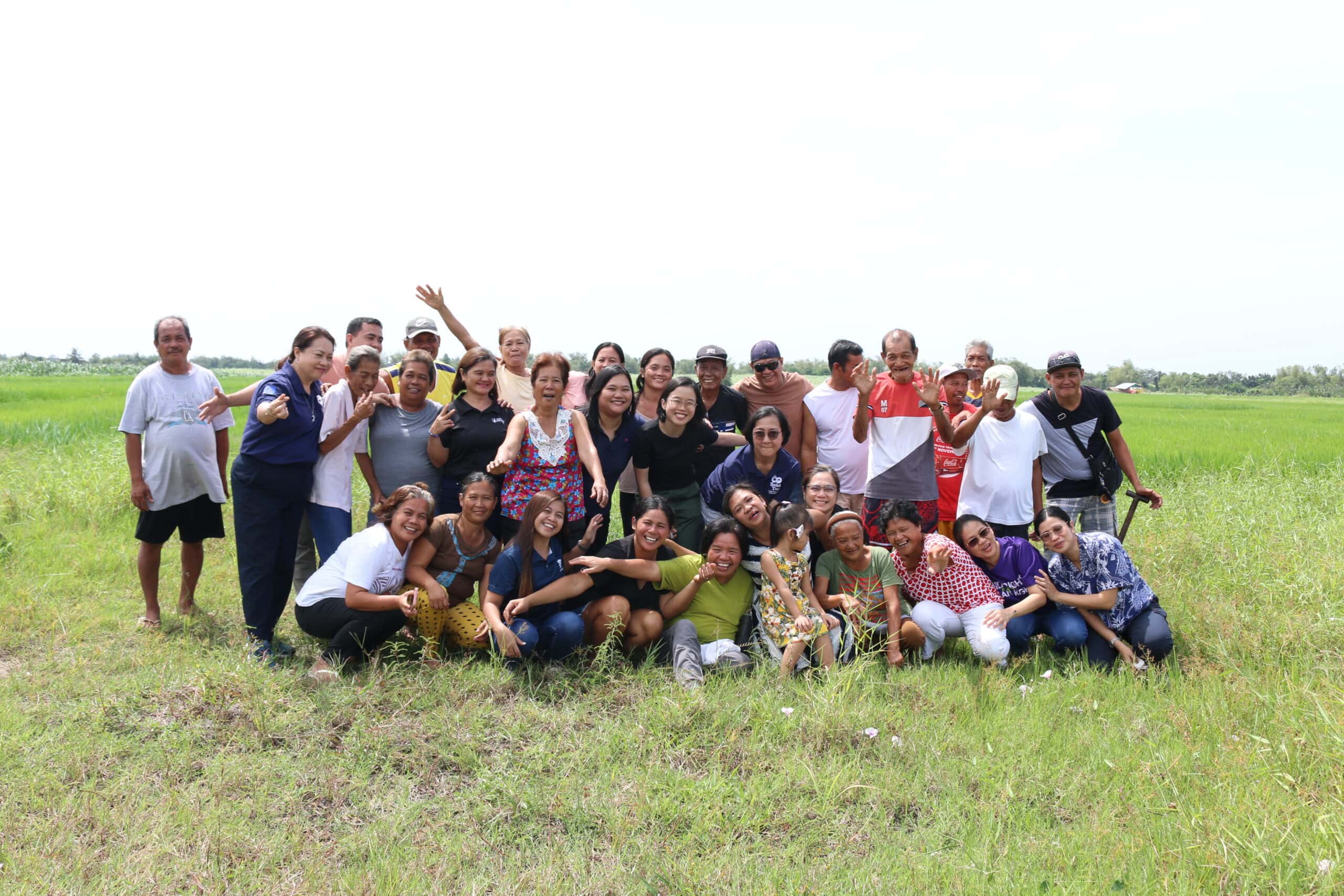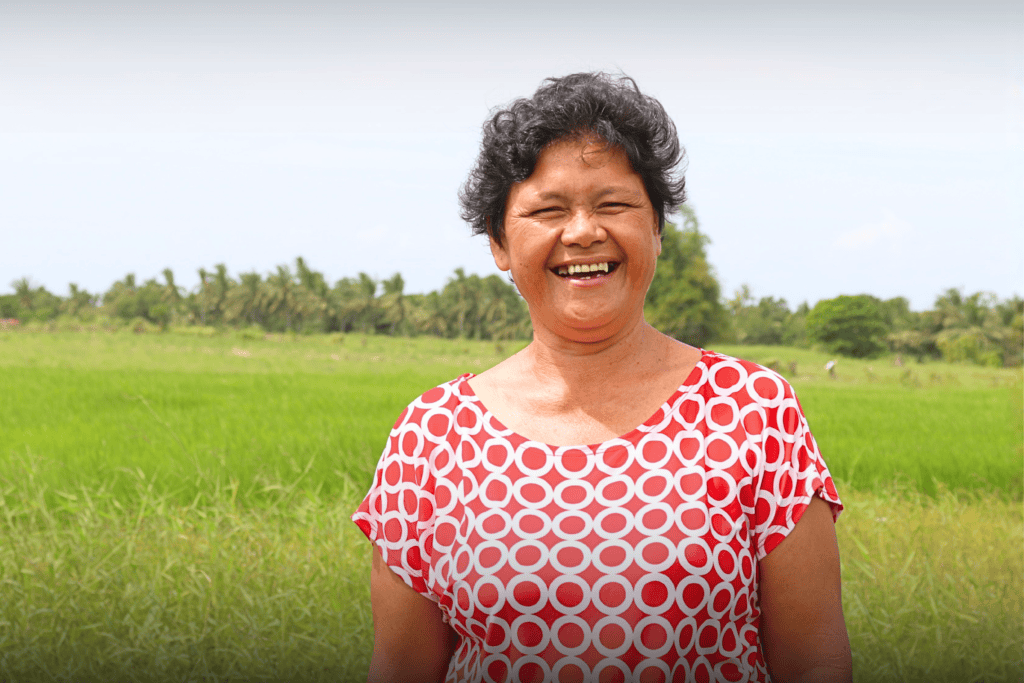
In Bago City, Negros Occidental, Girlie Arilla stands alongside fellow farmers in their pursuit of land rights and a more secure livelihood. As a farmer, community paralegal, and advocate, she helps bring attention to the challenges rural communities face, particularly women whose work and contributions often go unrecognized.
For Girlie Arilla, land is closely tied to the security families need to build their lives. It provides a place to grow food, earn a living, and provide for their children. When access to land remains uncertain, the effects can reach beyond the farm, shaping the choices and opportunities available to an entire family.
For women in farming communities, these challenges can carry additional weight. Alongside their contributions to agricultural work and household income, many shoulder caregiving responsibilities and the daily work of keeping their families afloat. When livelihoods are uncertain, these responsibilities become harder to manage, while limited access to resources and decision-making spaces can make it more difficult for women to assert their rights.
Girlie’s advocacy began with concerns affecting women and children. Over time, she came to recognize how landlessness and financial hardship could affect families and limit their choices. Her work with the Modesto Jalandoni Farmers Association (MOJAFAS) reflects this understanding of how land rights, livelihoods, and women’s participation are connected.
As a MOJAFAS leader and community paralegal, Girlie helps fellow farmers understand their rights, navigate challenges, and make their concerns heard. She also shares their experiences as one of the community storytellers involved in Rebranding Paralegal Empowerment for Agrarian Reform and Rural Development (Rebranding PARRD), implemented by KAISAHAN and the Negrosanon Young Leaders Institute (NYLI), with support from the European Union through the GOJUST Programme (EU-GOJUST).
For MOJAFAS, the need to make their voices heard became especially urgent when the opportunity to cultivate the land came alongside financial hardship, limited resources, and a legal challenge.
The struggle to cultivate the land
For years, MOJAFAS members had been processing their claims under the Comprehensive Agrarian Reform Program (CARP). With their families struggling financially and their livelihoods uncertain, waiting became increasingly difficult.
On March 5, 2024, the farmers entered and began cultivating a portion of the land identified for them as agrarian reform beneficiaries. It was a step toward making the land productive and creating a source of income for their families. But the work ahead would prove difficult.
Negros was experiencing extreme heat, with the heat index reaching 45°C. Water for irrigation was limited, and the farmers lacked the farm inputs needed to grow their crops. At the same time, they faced a grave coercion complaint filed by the previous landowner.
The farmers were trying to make a living from the land while dealing with a legal process that threatened to complicate their efforts. For families already facing financial insecurity, the cost of farming without adequate resources added another layer of uncertainty.
Through Rebranding PARRD, the project team helped bring MOJAFAS’s situation to public attention through a campaign and a fundraising effort.
The fundraiser collected ₱31,000, which the farmers used to purchase farm inputs. Following a rapid assessment of the community’s needs during El Niño, NYLI also reached out to CARE’s Humanitarian Partnerships Platform. The resulting assistance provided each family with support sufficient for two weeks.
These efforts helped address some of the farmers’ immediate needs as they worked to make the land productive and sustain their families.
Standing up for their rights
Cultivating the land was only one part of MOJAFAS’s struggle. The association also had to respond to the grave coercion complaint filed against its members.
For farmers navigating legal processes, understanding documents, finding legal assistance, and knowing how to respond can be difficult. These challenges can be particularly burdensome for families with limited resources and little time to spare between earning a living and meeting household needs.
With support from KAISAHAN and its legal counsel, MOJAFAS members prepared and filed a joint counter-affidavit. On June 19, 2024, they received a resolution from the prosecutor dismissing the complaint.
The resolution marked an important development for the association as its members continued cultivating the land and pursuing their concerns under agrarian reform.
For Girlie, community paralegal work connects with the concerns she has long cared about. Her advocacy for women and children has helped shape her understanding of how economic insecurity affects families. In farming communities, the ability to access land and earn a stable income can influence a family’s choices, opportunities, and well-being.
Women contribute to agricultural work, household management, and community organizing, yet their perspectives may not always be equally represented in decisions about land and livelihoods. Access to information and opportunities to participate can help women take a more active role in shaping decisions that affect their lives.
Through her work with MOJAFAS, Girlie stands alongside fellow farmers as they organize, understand their options, and speak up about the issues affecting their community.
Telling stories in their own way
For MOJAFAS, making its concerns heard has also meant finding ways to communicate beyond its immediate community.
Farmers are often discussed in conversations about agriculture, poverty, and land reform, but their own experiences can be overlooked. Their stories reveal what these issues mean in everyday life: the difficulty of finding farm inputs, the uncertainty of legal proceedings, and the determination to earn a living from the land.
As part of Rebranding PARRD, Storytillers PH provides rural women and young people with opportunities to share stories about their communities, their work, and the issues they face. Girlie became one of its Storytillers, bringing her community’s experiences into a wider conversation about land rights.
MOJAFAS also began managing its Facebook page and publishing content more independently. This gave the association a way to share updates about its activities and help others understand the realities behind its efforts to cultivate the land.
For women, opportunities to tell their own stories can help make their contributions and concerns more visible. Rather than having their experiences defined by others, they can share what matters to them and explain how issues such as landlessness affect their families and communities.
For Girlie, storytelling complements her work as a farmer and community paralegal. Both give her ways to stand alongside fellow farmers, share their experiences, and make their concerns heard.
Growing toward a more secure future
After the complaint was dismissed, MOJAFAS continued cultivating the land. Its members began growing bananas and other cash crops, working to turn the area into a source of livelihood for their families.
The challenges remain. Farming requires reliable access to water, supplies, and other resources, while the farmers continue to seek lasting security over the land they have worked hard to claim.
For women in farming communities, greater livelihood security can help ease the pressures of providing for their families and create more opportunities to participate in community life. Achieving this requires not only access to productive resources but also the knowledge and support needed to assert their rights.
MOJAFAS members have taken steps toward this future together. They have sought legal assistance, raised funds for farm inputs, connected with people who could help, and found ways to share their experiences beyond their community.
For Girlie and her fellow farmers, the work continues both in the fields and through the stories they tell. Each crop they plant is part of their effort to sustain their families. Each story helps bring their experiences into public view.
Their journey is not yet complete. But as they continue to cultivate the land, organize for their rights, and share their experiences, Girlie and MOJAFAS are working toward a future in which farmers can pursue more secure livelihoods and have a stronger voice in decisions that affect their lives.
This aspiration reflects the shared vision of NYLI and KAISAHAN: communities where people, especially those whose voices are often overlooked, can understand their rights, participate in decisions that affect them, and work together toward more inclusive and equitable rural communities. Girlie’s story is one part of this continuing effort, rooted in the land farmers cultivate and carried forward through the stories they choose to tell.